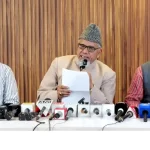
New Delhi | February 6, 2026:The India Arab Cultural Centre (IACC) at Jamia Millia Islamia (JMI) organized a high-profile extension lecture titled “From Jahliya to Legal Reforms: The Evolution of Islamic Law and the Transformation of Status of Muslim Women” on Thursday.
The event, held at the IACC Conference Room, featured prominent scholars who traced the historical trajectory of women’s rights from pre-Islamic times to modern-day legal frameworks.
Academic Patronage and Leadership
The session was inaugurated by Dr. Md. Aftab Ahmad, Director of IACC, who expressed his gratitude to Vice-Chancellor Prof. Mazhar Asif and Registrar Prof. (Dr.) Md. Mahtab Alam Rizvi for their continued support of academic dialogues that foster student engagement.
Prof. Hemanyun Akhtar Nazmi, Director of the Centre for West Asian Studies, chaired the session, while Dr. Ahmad moderated the discussion. The keynote address was delivered by Dr. Alisha Khatun from the Faculty of Law.
Also Read:–
Jamia Millia Islamia Hosts International Conference on “Qur’an and Science”
Jamia Millia Islamia Celebrates 77th Republic Day; VC and Registrar Stress Social Justice and Fraternity
Jamia Millia Islamia Showcases Architectural Excellence at Bharat Parv 2026
From Jāhiliyya to Shari’a: A Historical Shift
In his opening remarks, Prof. Nazmi provided a socio-political overview of Arab society during the Jāhiliyya (pre-Islamic) period. He noted that while the advent of Islam brought “huge” transformative changes to the status of women, there remains a pressing need for modern interpretation to address contemporary societal challenges.
Key takeaways from the lecture included:
- The Pre-Islamic Era: Characterized by social customs that often marginalized women.
- Early Islamic Revelations: Dr. Khatun highlighted how early Shari’a teachings introduced revolutionary rights regarding marriage, inheritance, and economic independence.
- The Role of Fiqh: Over centuries, various juristic interpretations (fiqh) and socio-cultural practices shaped—and sometimes limited—women’s roles.
Modern Reforms and Gender Justice
The lecture emphasized that the modern era has seen a significant shift driven by nationalism, colonial encounters, and global women’s rights movements.
“Modern legal reforms are increasingly reconciling religious principles with contemporary human rights ideals,” Dr. Khatun stated. She explained that the evolution of Muslim women’s status is a dynamic interplay between tradition and the ongoing pursuit of gender justice.
The event concluded with a formal vote of thanks by Dr. Zulfikar Ali Ansari (IACC). Notable attendees included Prof. Nasir Raza Khan and various faculty members from the Centre for West Asian Studies and the India Arab Cultural Centre.
- Bridging Science and Care: JMI Hosts 11th National Conference on Heart Disease Research
- Prof. Md. Imtiyaz Hassan Honoured with Careers360 Faculty Research Award for Most Outstanding Researcher
- Jamia Senior Secondary School Joins Hands with IIT Madras for Online Certificate Courses
- Army Commander Northern Command Chairs Security Review Meeting in Srinagar
- JIH Urges Government to Choose Dialogue Over Confrontation on Public Issues