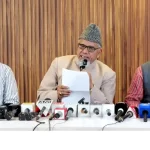
New Delhi | February 17, 2026: The India Arab Cultural Centre (IACC) at Jamia Millia Islamia (JMI) recently hosted an insightful extension lecture titled “India and Iran: Ancient Civilizational Links and Contemporary Perspectives.” Held on February 13, 2026, the event featured Dr. Faridoddin Faridasr, Cultural Counselor of the Islamic Republic of Iran in New Delhi, as the keynote speaker. The session was chaired by Prof. Zubair Meenai, Dean of the Faculty of Social Sciences at JMI.
Honoring a 3,000-Year Shared Heritage
The event was inaugurated by Dr. Aftab Ahmad, Director of the Centre, who expressed gratitude to Vice-Chancellor Prof. Mazhar Asif and Registrar Prof. (Dr.) Md. Mahtab Alam Rizvi for their continued patronage of academic dialogues that enrich student perspectives.
In his introductory remarks, Dr. Ahmad emphasized that the ties between India and Iran are among the world’s most profound, rooted in a shared Indo-Iranian origin stretching back over three millennia.
Also Read:
JMI and Ambedkar University Delhi Sign Landmark MoU for Joint Research and Academic Exchange
Jamia Millia Islamia Launches MSME-Backed Entrepreneurship Skill Development Programme (ESDP)
Jamia Millia Islamia Girls’ Hostels Host Vibrant ‘Meena Bazaar’ Cultural Fest
JMI Life Sciences Faculty Hosts Hands-On Workshop on Systematic Review and Meta-Analysis: Evidence Synthesis in Interdisciplinary Science
Key Highlights from Dr. Faridoddin Faridasr’s Lecture
Dr. Faridasr provided a comprehensive historical overview, noting that India and ancient Persia represent two of the world’s oldest continuous civilizations. Key takeaways included:
- Ancient Trade: Archaeological evidence, including Indus Valley seals found in southern Iran and Mesopotamia, points to robust trade as early as the 3rd millennium BCE.
- Linguistic Roots: Dr. Faridasr highlighted the parallels between Sanskrit and Old Persian, noting that the Rigveda and the Avesta share striking similarities in vocabulary, mythology, and ritual concepts.
- The Indo-Persian Era: The lecture touched upon the medieval period when Persian became the language of administration and literature in India, leading to the birth of the Sabk-e-Hendi (Indian style) literary tradition.
- Modern Diplomacy: Since establishing formal ties in 1950, both nations have navigated complex geopolitical landscapes, including U.S. sanctions, to maintain a pragmatic partnership focused on energy, regional connectivity, and cultural diplomacy.
“The relationship between India and Iran is not limited to modern geopolitics; it is anchored in deep spiritual traditions and material culture exchanges that have survived for millennia.” — Prof. Zubair Meenai
Looking Toward the Future
In his presidential remarks, Prof. Zubair Meenai noted that while the history is ancient, the contemporary relationship is evolving to meet modern global dynamics. He stressed that economic cooperation and regional connectivity remain the pillars of future bilateral interests.
The program concluded with a formal vote of thanks by Dr. Zulfikar Ali Ansari, who acknowledged the contributions of the speakers, faculty, and the diverse group of students in attendance.
- Bridging Science and Care: JMI Hosts 11th National Conference on Heart Disease Research
- Prof. Md. Imtiyaz Hassan Honoured with Careers360 Faculty Research Award for Most Outstanding Researcher
- Jamia Senior Secondary School Joins Hands with IIT Madras for Online Certificate Courses
- Army Commander Northern Command Chairs Security Review Meeting in Srinagar
- JIH Urges Government to Choose Dialogue Over Confrontation on Public Issues