By: Anzarul Bari Rafiqui
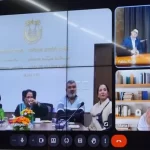
The second India–Arab Foreign Ministers’ Meeting in New Delhi may seem like a routine diplomatic engagement. In reality, it signals a profound shift in global power dynamics. As the international system enters an unstable, multipolar phase, the growing convergence between India and the Arab world is a deliberate strategic calculation.
A Shift from South Asian Power to Global Actor
The meeting underscores India’s evolving role—from a South Asian power to a global actor capable of fostering stability across the Middle East, Africa, and the Indian Ocean. Simultaneously, Arab states are realizing that relying solely on Western powers is no longer sustainable. Partnerships with rising Asian economies, specifically India, have transformed from a diplomatic option into a strategic necessity.
Historical Ties and Modern Synergies
India-Arab relations are built on centuries of trade and culture, free from the baggage of colonialism or military intervention. Today, this foundation has evolved into a robust network of:
- Energy Trade: Securing India’s massive fuel requirements.
- Labor Mobility: Supporting millions of Indian nationals in the Gulf.
- Maritime Connectivity: Ensuring safe passage in vital shipping lanes.
- Investment Flows: Aligning Gulf capital with India’s growth potential.
Strategic Autonomy and Realistic Diplomacy
External Affairs Minister S. Jaishankar’s engagements during the summit reflect a mature foreign policy. Indian diplomacy is now driven by tangible interests rather than symbolic rhetoric. By focusing on defense cooperation, advanced technology, and education, India is synchronizing its economic growth with strategic autonomy.
As the U.S. scales back its regional footprint and Europe looks inward, India offers the Arab world a stable, non-ideological partnership. Unlike other major powers, India seeks cooperation without disrupting regional balances or imposing external agendas.
Energy Security and Economic Stability
For India, the Middle East is the heartbeat of its energy security. Any regional conflict has immediate domestic economic repercussions. Institutionalizing relations with the Arab League allows India to:
- Secure stable energy supplies during crises.
- Open new avenues for infrastructure and tech collaboration.
- Coordinate on counter-terrorism and maritime security.
Navigating Regional Tensions: Palestine and Iran
India’s balanced stance on Palestine and Gaza reinforces its credibility. By supporting Palestinian rights while maintaining a partnership with Israel, India proves it can navigate sensitive issues without abandoning its principles.
Furthermore, with rising tensions in the Strait of Hormuz and between Iran and the U.S., India’s coordination with Arab states acts as a “strategic buffer.” This protects not only energy markets but also the millions of Indian expatriates contributing to the region’s economy.
Conclusion: Shaping the New Global Order
The India–Arab Foreign Ministers’ Meeting reflects a diplomacy of strategic patience. It proves that India is no longer just adapting to global realignments—it is actively shaping them. As the Arab world becomes one of India’s most consequential partners, this meeting marks the beginning of a long-term, institutionalized alliance in a shifting world.
- Jamia’s RCA Shines: 38 Students Clear UPSC 2025 with 4 in Top 50

- JIH President Condemns US-Israel Aggression on Iran, Warns Against Wider Gulf War

- Srinagar Police Launch Major Crackdown on Fake News Network; Multiple Summons Issued

- JIH President Syed Sadatullah Husaini Mourns Ayatollah Ali Khamenei Assassination, Blasts US-Israel Strikes on Iran
- Jamia Millia Islamia Partners with Argentina’s UNSAdA to Bolster Global Academic Research