
Introduction
The question of women’s reforms within the Muslim community in contemporary India has emerged as one of the most debated social, legal, and intellectual concerns of the twenty-first century. In India, Muslim women stand at the intersection of religion, patriarchy, class marginalization, educational backwardness, and state policy. While Islam historically introduced several progressive rights for women in seventh-century Arabia—including inheritance, consent in marriage, and property rights—the socio-cultural realities of South Asian Muslim societies often reflect patriarchal customs rather than the ethical spirit of Islamic teachings.[^1]
Muslim women in India face a double challenge. On one hand, they experience socio-economic denial and educational marginalization; on the other, they are frequently subjected to conventional interpretations of religious law that control their autonomy. The debates surrounding triple talaq, women’s access to mosques, education, employment, inheritance, and political representation disclose the urgent necessity for reforms that settle with constitutional values, Islamic ethics, and gender justice.[^2]
This article investigates the need for women’s reforms within the Muslim community in twenty-first century India by understaning and analyzing historical developments, socio-economic realities, Islamic perspectives, legal reforms, and contemporary feminist discourses.
Historical Background: Muslim Women in India
The status of Muslim women in India cannot properly be understood without investigating the historical evolution of Muslim society in South Asia. During the pre-colonial period, women in elite Muslim households often enjoyed access to education, literature, and cultural life. Women such as Raziya, Jahanara Begum and Zeb-un-Nissa were part of intellectual and spiritual practices. However, patriarchal customs such as purdah, child marriage, and restrictions on mobility gradually became deep-rooted in society.[^3]
The colonial period started debates on Muslim social reform. Reformers such as Sir Syed Ahmad Khan emphasized modern education but often approached women’s education cautiously. Later Muslim reformers including Maulana Ashraf Ali Thanwi advocated domestic education for women, though within patriarchal boundaries.[^4]
The twentieth century witnessed the emergence of Muslim women writers and activists who questioned conservative norms and pratices. Figures such as Begum Rokaya advocated female education and challenged patriarchal interpretations of religion. Post-independence, constitutional democracy produced opportunities for legal equality, yet many Muslim women remained marginalized due to poverty, illiteracy, and communal politics.[^5]
Socio-Economic Challenges and Muslim Women in India
Educational Backwardness
Education remains one of the most significant indicators of social empowerment. Reports such as the Sachar Committee Report (2006) demonstrated that Muslims in India are backwards as compared with many other communities in terms of literacy, higher education, and employment opportunities.[^6] Muslim women are particularly doubly disadvantaged with respect to gender discrimination, economic hardship, and inadequate educational infrastructure. In many traditional households, girls’ education is often restricted by early marriage, domestic responsibilities and concerns regarding social honor. Though the situation is gradually improving in urban areas, Muslim women in the countyside continue to face harsh educational exclusion.[^7]
Marginalization in Economic Sphere
Muslim women are one-sidedly represented in the informal sector, where wages are low, job security is absent and work hours are longer. Many engage in home-based labor like embroidery, tailoring, handicrafts, and domestic work which are either unpaod or very less paid. Their economic contribution frequently remains invisible, undervalued and unrepresented.[^8] The lack of vocational training, financial literacy, and institutional support further worsenes their economic independence. Economic dependency on male family members often limits women’s decision-making power within the household and society.
Areas of Health and Social Welfare
Health indicators among Muslim women also expose structural inequalities and unevenness. Restricted access to healthcare, poor nutrition, maternal health and inadequate awareness challenges regarding reproductive rights influence women’s well-being and overall development.[^9] In certain regions, patriarchal norms and practices discourage women from gaining independent medical assistance, thus deepening gender disparities.
Islamic Perspectives on Women’s Rights
A significant aspect of the debate concerns the difference between Islamic teachings and patriarchal cultural practices. The Qur’an granted women several rights unprecedented in pre-Islamic Arabia, including rights to inheritance, divorce, consent in marriage, and property ownership.[^10] For example, the Qur’anic code of spiritual equality is uttered in the verse:
“Indeed, the Muslim men and Muslim women, the believing men and believing women… Allah has prepared for them forgiveness and a great reward” (Qur’an 33:35).
Likewise, women’s inheritance rights were institutionalized in Islamic law centuries before modern European legal systems documented comparable rights.[^11]
Modern Muslim intellectuals argue that several discriminatory practices are products of patriarchal interpretation rather than divine injunctions. Islamic feminist thinkers like Amina Wadud and Asma Barlas emphesized contextual and gender-sensitive readings of the Qur’an.[^12] In India, organizations led by Muslim women have increasingly challenged male-dominated religious authority structures. They point oiu that reforms are not anti-Islamic but are rooted in the ethical principles of justice (adl), compassion (rahma), and equality embedded within Islamic tradition.
The Issue of Triple Talaq and Legal Reforms
One of the most significant developments in recent Indian legal history was the eradication of instant triple talaq (talaq-e-biddat). In the landmark case of Shayara Bano v. Union of India (2017), the Supreme Court stated instant triple talaq unconstitutional.[^13] The following legislation, the Muslim Women (Protection of Rights on Marriage) Act, 2019, criminalized the practice of instant triple talaq.
Those who supported argued that the reform protected Muslim women from arbitrary divorce and strengthened constitutional gender justice. Critics, however, contended that criminalization could disproportionately target Muslim men and politicize Muslim personal law.[^14]
Nevertheless, the debate intensified wider discussions regarding reforms in Muslim Personal Law related to:
- Polygamy
- Maintenance rights
- Child custody
- Inheritance equality
- Age of marriage
The issue reflects the complex relationship between religious freedom, minority identity, and constitutional rights in secular India.
Muslim Women and Activism in Contemporary India
The twenty-first century has witnessed the rise of Muslim women-led activism across India. Organizations like the Bhartiya Muslim Mahila Andolan have campaigned for gender justice, legal reforms, and women’s access to religious spaces.[^15] Muslim women activists more and more employ constitutional language alongside Islamic arguments. This double strategy allows them to challenge both patriarchal interpretations and communal stereotypes that represent Muslim women merely as passive victims.
Reform, Identity, and the Politics of Representation in India
Debates regarding Muslim women’s reforms in India are often intricated by communal politics and Islamophobia. External critiques of Muslim society at times instrumentalize women’s rights to stigmatize the entire community. Accordingly, many Muslim intellectuals fear that state intervention in personal laws may weaken minority rights guaranteed under the Indian Constitution.
On the other hand, protecting minority identity should not become a justification for denying women’s rights. Authentic reform must come out through democratic dialogue within the community while remaining associated with constitutional principles of equality and dignity.
A significant challenge is therefore balancing: Religious freedom, Minority protection, and Gender justice. This balance requires inclusive scholarship, community participation, and women’s leadership in religious interpretation and institutional reform.
Key Areas Requiring Immediate Reform
- Educational Empowerment: Greater investment in girls’ education, scholarships, digital literacy, and higher education opportunities is essential for long-term empowerment.
- Reform in Personal Laws: Muslim Personal Law requires reinterpretation in light of constitutional morality and contemporary socio-economic realities while remaining grounded in Islamic ethical principles.
- Women’s Religious Leadership: Women should be encouraged to participate in religious scholarship, mosque administration, and community leadership.
- Economic Inclusion: Skill development, entrepreneurship programs, and financial inclusion initiatives can strengthen women’s economic autonomy.
- Combating Patriarchal Attitudes: Social reform cannot succeed solely throug legislation. Transforming patriarchal mindsets within families and institutions remains equally important.
Conclusion
The question of women’s reforms within the Muslim community in twenty-first century India is not only a legal or religious issue but also fundamentally connected to social justice, democratic citizenship, and human dignity. Muslim women nowadays are increasingly asserting their agency through education, activism, legal engagement, and reinterpretation of religious traditions.
Reforms should not be perceived as an attack on Islam or Muslim identity. Rather, they should be understood as efforts to renew the ethical foundations of justice, equality, and compassion that are central both to Islam and the Indian Constitution. The future of the Muslim community in India depends considerably on the empowerment and participation of women in all spheres of life.
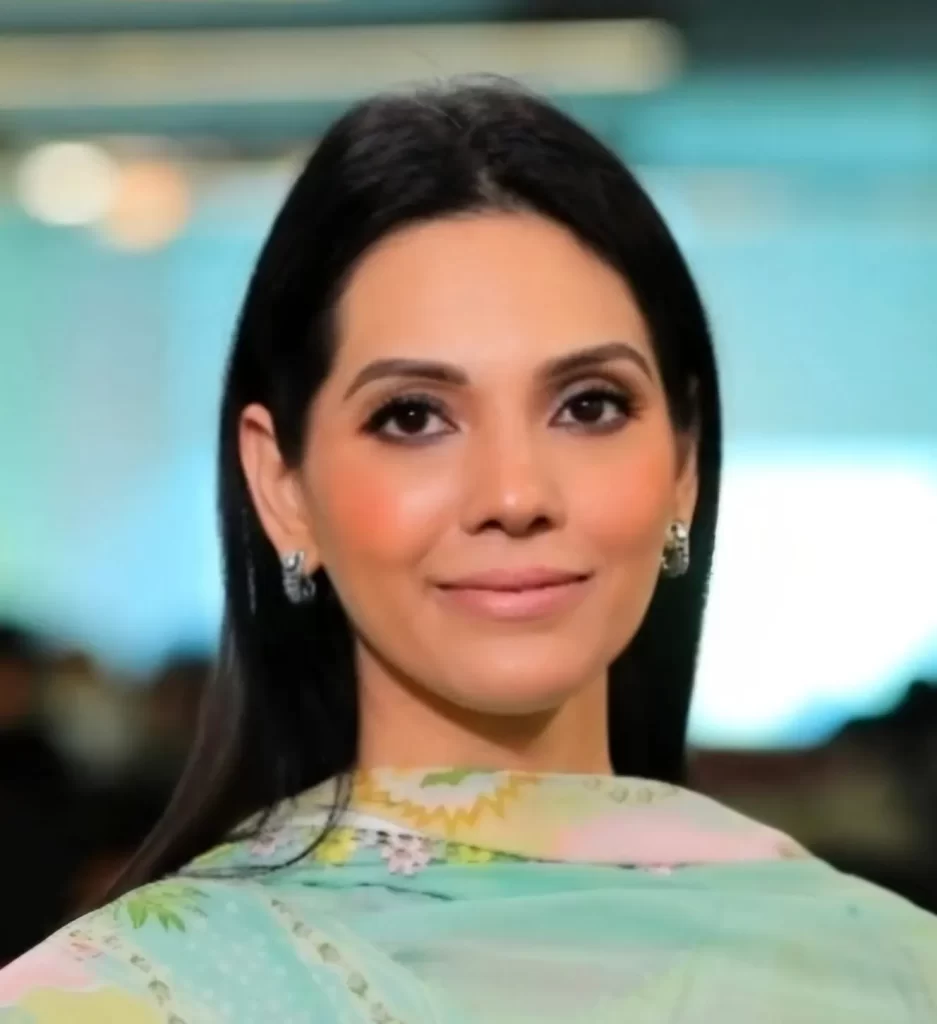
Note: The writer Dr. Shalini Ali is a Social Activist, Author and National Convener of Muslim Rashtriyaa Manch (MRM).
Bibliography
- Sayara Bano v. Union of India, (2017) 9 SCC 1.
- Ahmed, Leila. Women and Gender in Islam. New Haven: Yale University Press, 1992.
- Agnes, Flavia. “Triple Talaq Bill and the Politics of Muslim Women’s Rights.” Economic and Political Weekly 54, no. 6 (2019): 10–13.
- Engineer, Asghar Ali. The Rights of Women in Islam. New Delhi: Sterling Publishers, 1992.
- Forbes, Geraldine. Women in Modern India. Cambridge: Cambridge University Press, 1996.
- Government of India. Sachar Committee Report. New Delhi: Cabinet Secretariat, 2006.
- Hasan, Zoya, and Ritu Menon. Unequal Citizens: A Study of Muslim Women in India. New Delhi: Oxford University Press, 2004.
- Kabeer, Naila. Gender, Labour and Globalization. New Delhi: Tulika Books, 2008.
- Lal, Ruby. Domesticity and Power in the Early Mughal World. Cambridge: Cambridge University Press, 2005.
- Metcalf, Barbara D. Perfecting Women: Maulana Ashraf Ali Thanawi’s Bihishti Zewar. Berkeley: University of California Press, 1990.
- Niaz, Noorjehan Safia. Muslim Women Speak. New Delhi: Harper Collins India, 2018.
- Qadeer, Imrana. “Health and Gender in India.” Social Scientist 40, no. 1–2 (2012): 45–53.
- Rahman, Fazlur. Major Themes of the Qur’an. Chicago: University of Chicago Press, 1980.
- Wadud, Amina. Qur’an and Woman. New York: Oxford University Press, 1999.
[^1]: Leila Ahmed, Women and Gender in Islam (New Haven: Yale University Press, 1992), 67-72. [^2]: Zoya Hasan and Ritu Menon, Unequal Citizens: A Study of Muslim Women in India (New Delhi: Oxford University Press, 2004), pp.112-130. [^3]: Ruby Lal, Domesticity and Power in the Early Mughal World (Cambridge: Cambridge University Press, 2005), 120-124. [^4]: Barbara D. Metcalf, Perfecting Women: Maulana Ashraf Ali Thanawi’s Bihishti Zewar (Berkeley: University of California Press, 1990), 35-41. [^5]: Geraldine Forbes, Women in Modern India (Cambridge: Cambridge University Press, 1996), 89–94. [^6]: Government of India, Sachar Committee Report (New Delhi: Cabinet Secretariat, 2006), 78–82. Abdul Shaban, “Educational Status of Muslim Women in India,” Economic and Political Weekly 49, no. 3 (2014): 39–45. [^7]: Naila Kabeer, Gender, Labour and Globalization (New Delhi: Tulika Books, 2008), 102–109. [^8]: Imrana Qadeer, “Health and Gender in India,” Social Scientist 40, no. 1–2 (2012): 45–53. [^9]: Fazlur Rahman, Major Themes of the Qur’an (Chicago: University of Chicago Press, 1980), 38–41. [^10]: Asghar Ali Engineer, The Rights of Women in Islam (New Delhi: Sterling Publishers, 1992), 22–29. [^11]: Amina Wadud, Qur’an and Woman (New York: Oxford University Press, 1999), 14–20. [^12]: Shayara Bano v. Union of India, (2017) 9 SCC 1. [^13]: Flavia Agnes, “Triple Talaq Bill and the Politics of Muslim Women’s Rights,” Economic and Political Weekly 54, no. 6 (2019): 10–13. [^14]: Noorjehan Safia Niaz, Muslim Women Speak (New Delhi: HarperCollins India, 2018), 55–60. [^15]: Nazia Akhtar, “Shaheen Bagh and Muslim Women’s Political Assertion,” Indian Journal of Gender Studies 28, no. 2 (2021): 210–225.
- Bridging Science and Care: JMI Hosts 11th National Conference on Heart Disease Research
- Prof. Md. Imtiyaz Hassan Honoured with Careers360 Faculty Research Award for Most Outstanding Researcher
- Jamia Senior Secondary School Joins Hands with IIT Madras for Online Certificate Courses

- Army Commander Northern Command Chairs Security Review Meeting in Srinagar
- JIH Urges Government to Choose Dialogue Over Confrontation on Public Issues
- Jamia Millia Islamia Student Bags ₹35 LPA Pre-Placement Offer from VISA

- Woman Performs Stunt on Moving Car’s Bonnet on Highway; ARTO Rajouri Suspends Vehicle Registration

- JMI Climbs to 334th Globally in UI GreenMetric 2026; Rises 42 Places, 13th in India